Best Compact Cameras for Travel in 2026: 8 Top Picks

This post may contain affiliate links, meaning we may earn a commission at no additional cost if you decide to purchase through links.
Are you often looking for the best compact camera for travel? It means balancing image quality with something you’ll actually want to carry all day. A great travel camera should be lightweight, quick to use, and capable of capturing everything from city streets and landscapes to food, portraits, and spontaneous moments.
For 2026, some of the strongest options range from truly pocketable cameras like the Ricoh GR IV to premium models such as the Fujifilm X100VI, versatile zoom cameras like the Sony RX100 VII, and rugged options built for beaches and outdoor adventures.
Below, we’ve compared the best compact travel cameras for different types of travelers, whether you prioritize photography, video, portability, zoom, or durability.
Best Compact Cameras for Travel: Quick Picks
| 🏆 Best overall for travel photography | Ricoh GR IV |
| ✨ Best premium compact | Fujifilm X100VI |
| 🔭 Best compact with zoom | Sony RX100 VII |
| 🎥 Best for travel video | Canon PowerShot V1 |
| 🌊 Best rugged/adventure camera | OM System Tough TG-7 |
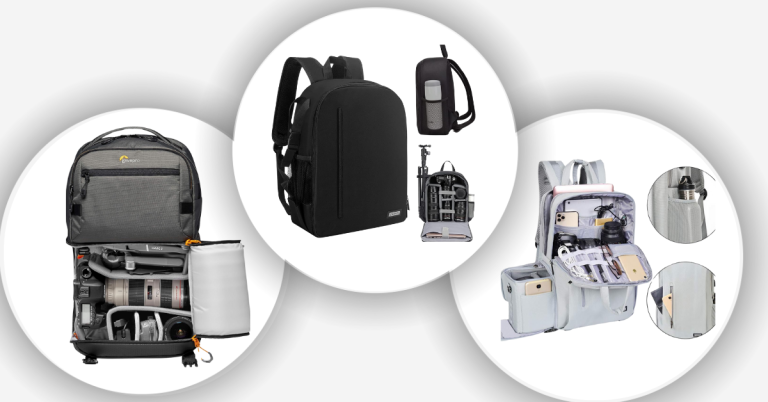
Check for the Best camera bags for travel
1. Ricoh GR IV — Best Overall Compact Camera for Travel
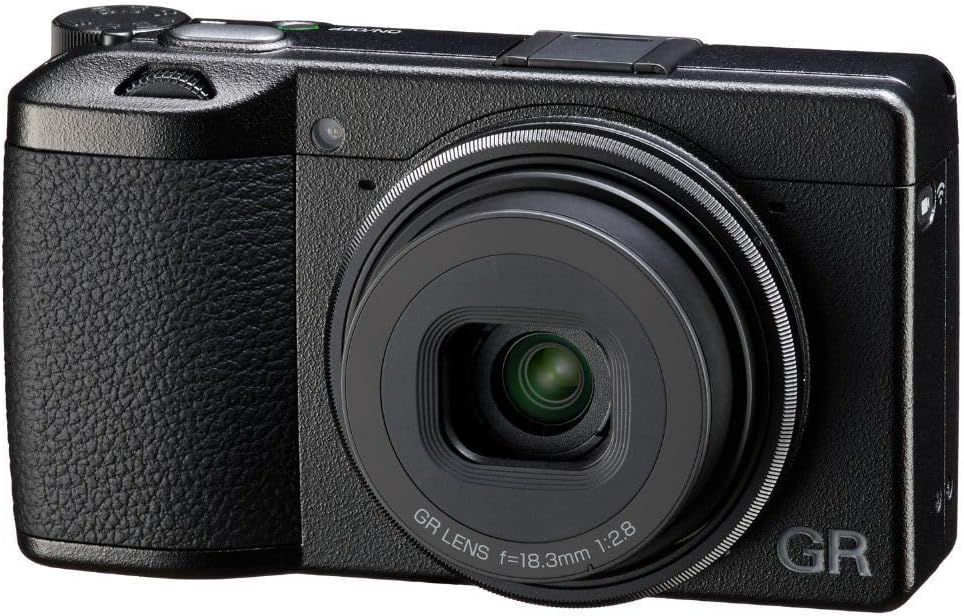
(Image credit: Amazon)
If portability and photo quality are your priorities, the Ricoh GR IV is one of the strongest compact travel cameras. Its small body makes it easy to carry while exploring cities, walking all day, or traveling with minimal luggage.
Inside is a 25.7MP APS-C sensor paired with a fixed 28mm-equivalent f/2.8 lens. That wide focal length works especially well for street photography, architecture, landscapes, cafés, and everyday travel moments.
Why We Like It for Travel
The biggest advantage of the Ricoh GR IV is that you get a relatively large APS-C sensor in a genuinely compact camera. You don’t need to carry interchangeable lenses or a large camera bag, which makes it particularly appealing for travelers who value simplicity.
Its 5-axis sensor-shift stabilization also helps when shooting handheld, while the 28mm-equivalent lens provides a versatile field of view for destinations and street scenes.
Best for: Street photography, city breaks, lightweight travel, and photographers who prioritize still images.
Key specs:
- 25.7MP APS-C sensor
- 28mm-equivalent f/2.8 fixed lens
- 5-axis image stabilization
- RAW (DNG) + JPEG
- Compact fixed-lens design
Pros
- Excellent image quality for its size
- Highly portable
- Large APS-C sensor
- Great focal length for travel and street photography
- Built-in image stabilization
Cons
- No optical zoom
- Fixed 28mm-equivalent lens won’t suit everyone
- More photography-focused than video-focused
Choose the Ricoh GR IV if: you want a small travel camera that prioritizes excellent still photography without carrying additional lenses.
2. Fujifilm X100VI — Best Premium Compact Camera for Travel

(Image credit: Amazon)
The Fujifilm X100VI is a compelling premium choice for travelers who care about photography but don’t want to carry an interchangeable-lens camera everywhere.
It combines a 40.2MP APS-C sensor with a fixed 23mm f/2 lens, giving you a field of view equivalent to approximately 35mm on a full-frame camera.
That focal length is particularly versatile for street scenes, environmental portraits, cafés, architecture, and everyday travel photography.
Why We Like It for Travel
One of the X100VI’s biggest attractions is the experience of using it.
Its hybrid optical/electronic viewfinder gives photographers different ways to compose an image, while Fujifilm’s Film Simulation modes can create distinctive JPEG looks directly from the camera.
The X100VI also includes in-body image stabilization and can record video up to 6.2K, making it more versatile than a camera designed purely around still photography.
The trade-off is portability. At around 478g including its battery and memory card, it’s substantially heavier than a truly pocket-first camera such as the Ricoh GR IV.
Best for: Travel photographers, street photography, city trips, and travelers who want a premium fixed-lens camera.
Key specs:
- 40.2MP APS-C sensor
- 35mm-equivalent f/2 fixed lens
- In-body image stabilization
- Hybrid optical/electronic viewfinder
- Up to 6.2K video
- Fujifilm Film Simulation modes
Pros
- High-resolution APS-C sensor
- Excellent 35mm-equivalent focal length for everyday travel
- Built-in stabilization
- Beautiful JPEG options
- Optical and electronic viewfinder
- Strong still-photo and video capabilities
Cons
- Premium price
- Fixed lens with no optical zoom
- Larger and heavier than pocket-focused compact cameras
Choose the Fujifilm X100VI if: photography is an important part of your travels and you’re willing to spend more for a premium camera that can stay with you for years.
3. Sony RX100 VII — Best Compact Camera With Zoom for Travel
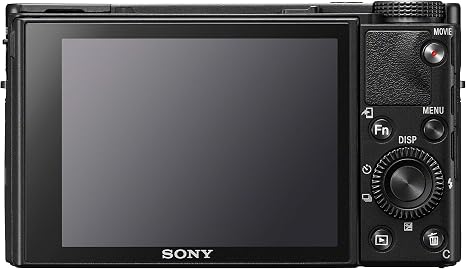
(Image credit: Amazon)
If you want a small travel camera with serious zoom, the Sony RX100 VII is one of the most versatile options. Its built-in 24–200mm-equivalent f/2.8–4.5 lens lets you photograph everything from wide city scenes and landscapes to distant architecture, wildlife, and details without changing lenses.
It uses a 20.1MP 1-inch sensor and weighs around 302g with the battery and memory card, making it considerably easier to travel with than a larger interchangeable-lens setup.
Why We Like It for Travel
The biggest reason to choose the RX100 VII is its 24–200mm zoom range. You can photograph a wide landscape at 24mm and then zoom in on a distant subject at 200mm—all with the same pocket-sized camera.
Sony also gives the RX100 VII fast autofocus, Real-time Tracking, Eye AF, up to 20 fps continuous shooting, and 4K video. The 180-degree tilting screen and microphone input are useful if you also create travel videos.
Best for: Travelers who want one small camera for landscapes, cities, portraits, distant subjects, and video.
Key specs:
- 20.1MP 1-inch sensor
- 24–200mm-equivalent f/2.8–4.5 zoom lens
- 8x optical zoom
- Real-time Tracking and Eye AF
- Up to 20 fps continuous shooting
- 4K video
- 180° tilting touchscreen
- Approx. 302g with battery and memory card
Pros
- Excellent 24–200mm zoom range for travel
- Small and lightweight
- Fast autofocus and subject tracking
- Built-in electronic viewfinder
- Good still-photo and video versatility
- No extra lenses to carry
Cons
- Smaller sensor than the Ricoh GR IV and Fujifilm X100VI
- Premium price for an older compact-camera design
- Maximum aperture becomes narrower as you zoom
- Small body and controls may feel cramped for some photographers
Choose the Sony RX100 VII if: you want a genuinely compact travel camera but don’t want to give up the flexibility of a zoom lens.
Ricoh GR IV vs Fujifilm X100VI vs Sony RX100 VII
If you’re choosing between our first three cameras, the biggest difference is the lens.
Choose the Ricoh GR IV for maximum portability and high-quality travel and street photography.
Choose the Fujifilm X100VI for a premium photography experience, a built-in viewfinder, high resolution, and a classic 35mm-equivalent perspective.
Choose the Sony RX100 VII if versatility matters most and you want to go from wide-angle to telephoto without carrying extra lenses.
Best for portability: Ricoh GR IV
Best premium experience: Fujifilm X100VI
Best for zoom: Sony RX100 VII
Best for one-camera versatility: Sony RX100 VII
4.Canon PowerShot V1 — Best Compact Camera for Travel Video & Vlogging

(Image credit: Amazon)
If you create travel videos, YouTube vlogs, or social media content, the Canon PowerShot V1 is one of the most interesting compact cameras to consider.
It combines a 22.3MP sensor with a built-in 16–50mm-equivalent f/2.8–4.5 zoom lens. The extra-wide 16mm view is particularly useful when filming yourself while walking, capturing interiors, or showing more of the destination behind you.
Why We Like It for Travel
The PowerShot V1 is designed with video creators in mind.
It can record 4K video up to 60p (with a crop at 50/60p), has a fully articulating touchscreen, microphone and headphone connections, and a built-in cooling fan designed to support longer recording sessions.
There’s also a built-in ND filter, which is especially useful when shooting video outdoors in bright destinations.
Unlike a fixed-lens camera such as the Ricoh GR IV, the V1 gives you a useful zoom range without requiring interchangeable lenses.
Best for: Travel vloggers, YouTube creators, Reels, solo travelers who film themselves, and hybrid shooters who prioritize video.
Key specs:
- 22.3MP sensor
- 16–50mm-equivalent f/2.8–4.5 zoom lens
- 4K video up to 60p
- Fully articulating touchscreen
- Built-in ND filter
- Microphone and headphone connections
- Built-in cooling fan
- Canon Dual Pixel autofocus
Pros
- Ultra-wide 16mm-equivalent view is excellent for vlogging
- Strong autofocus and subject tracking
- Built-in zoom lens
- Fully articulating screen
- External microphone support
- Built-in ND filter
- Cooling fan for longer video sessions
- Good balance between video and still photography
Cons
- 4K 60p uses a crop
- Larger than some pocket-sized compact cameras
- No built-in electronic viewfinder
- More video-focused than photography-focused
Choose the Canon PowerShot V1 if: video is just as important—or more important—than photography and you want an all-in-one travel camera without carrying separate lenses.
5.OM System Tough TG-7 — Best Compact Camera for Adventure Travel & Underwater Photography

(Image credit: Amazon)
If your trips involve beaches, snorkeling, hiking, rain, snow, or rugged outdoor adventures, the OM System Tough TG-7 is built for places where you may not want to risk a conventional camera.
Unlike the premium compact cameras above, the TG-7 isn’t designed to deliver the largest sensor or highest resolution. Its biggest advantage is durability: it’s waterproof to 15 meters (50 feet), shockproof from drops up to 2.1 meters, freeze-proof to -10°C, dustproof, and crushproof up to 100kg.
That makes it especially useful for tropical vacations, snorkeling trips, hiking, kayaking, skiing, and family beach days.
Why We Like It for Travel
The TG-7 combines its rugged body with a 12MP sensor and 25–100mm-equivalent f/2–4.9 optical zoom lens, giving you more framing flexibility than a fixed-lens compact.
It can also shoot RAW images and 4K video up to 30p, while built-in GPS and field sensors can record useful information during outdoor adventures.
At approximately 249g with its battery and memory card, it’s also light enough to carry without adding much weight to your travel bag.
Its biggest compromise is image quality. The TG-7’s small sensor can’t compete with the much larger APS-C sensors inside cameras such as the Ricoh GR IV or Fujifilm X100VI, particularly when light levels drop.
You’re choosing this camera primarily because it can go places those cameras can’t.
Best for: Snorkeling, beaches, hiking, kayaking, skiing, adventure travel, and travelers who need a rugged camera.
Key specs:
- 12MP BSI CMOS sensor
- 25–100mm-equivalent f/2–4.9 lens
- 4× optical zoom
- Waterproof to 15m / 50ft
- Shockproof from 2.1m / 7ft
- Freezeproof to -10°C / 14°F
- Crushproof to 100kg / 220lb
- Dustproof construction
- RAW photography
- 4K video up to 30p
- Built-in GPS
- Approx. 249g with battery and memory card
Pros
- Waterproof without needing a separate housing for shallow-water use
- Excellent choice for snorkeling and beach vacations
- Tough enough for demanding outdoor trips
- Compact and lightweight
- Useful 4× optical zoom
- RAW image capture
- Strong macro capabilities
- Built-in GPS and outdoor sensors
Cons
- Small 12MP sensor
- Image quality can’t match premium APS-C compact cameras
- Fixed rear screen
- No touchscreen
- Video features are relatively basic
Choose the OM System Tough TG-7 if: you care more about durability, water resistance, and taking your camera anywhere than achieving the absolute highest image quality.
6. Panasonic Lumix TZ99 / ZS99 — Best Value Compact Camera for Travel

(Image credit: Amazon)
If you want a versatile compact travel camera without spending premium-camera money, the Panasonic Lumix TZ99—called the ZS99 in some markets is one of the most practical options on this list.
Its standout feature is the built-in 30× optical zoom, covering an impressive 24–720mm-equivalent range. That means one small camera can handle wide landscapes, city streets, portraits, architecture, and distant subjects without requiring extra lenses.
Why We Like It for Travel
The TZ99 is designed around convenience.
At the wide end, 24mm is useful for landscapes, buildings, and city photography. Zoom all the way to 720mm, and you can capture distant landmarks or wildlife that would be impossible to photograph closely with most smartphones.
It also offers 20.3MP resolution, 4K video, optical image stabilization, a tilting touchscreen, and USB-C charging.
At approximately 322g with the battery and memory card, it’s still light enough to carry around throughout a sightseeing day.
Best for: Travelers who want a compact, versatile zoom camera at a more accessible price than premium compacts.
Key specs:
- 20.3MP 1/2.3-inch sensor
- 24–720mm-equivalent lens
- 30× optical zoom
- Optical image stabilization
- 4K video
- Tilting touchscreen
- USB-C charging
- Bluetooth connectivity
- Approx. 322g with battery and memory card
Pros
- Huge 30× optical zoom range
- Useful 24mm wide-angle starting point
- Compact enough for travel
- 4K video
- Tilting touchscreen
- USB-C charging is convenient while traveling
- More affordable than premium compact cameras
Cons
- Small sensor compared with the Ricoh GR IV and Fujifilm X100VI
- Low-light image quality is more limited
- Lens becomes relatively slow when fully zoomed
- No electronic viewfinder
Choose the Panasonic Lumix TZ99 / ZS99 if: you want one reasonably priced travel camera that can photograph everything from landscapes to distant subjects without carrying interchangeable lenses.
Panasonic TZ99 vs Sony RX100 VII: Which Travel Zoom Is Better?
Choose the Panasonic TZ99 if zoom range and value matter most. Its 24–720mm-equivalent lens gives you substantially more reach and makes it particularly useful for sightseeing and distant subjects.
Choose the Sony RX100 VII if you’re willing to pay more for a larger 1-inch sensor, faster autofocus, and stronger overall image quality.
Best value: Panasonic TZ99
Best zoom range: Panasonic TZ99
Best image quality: Sony RX100 VII
Best autofocus: Sony RX100 VII
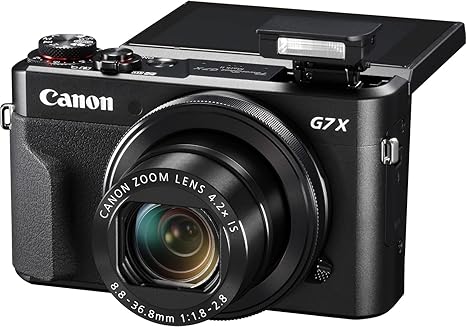
7. Canon PowerShot G7 X Mark III — Best Compact Camera for Beginners
(Image credit: Amazon)
If you’re moving beyond smartphone photography and want a compact travel camera that’s easy to learn, the Canon PowerShot G7 X Mark III is a strong beginner-friendly option.
It combines a 20.1MP 1-inch sensor with a bright 24–100mm-equivalent f/1.8–2.8 zoom lens, giving you enough flexibility for landscapes, street scenes, food, portraits, and everyday vacation photos without having to learn how to use interchangeable lenses.
Why We Like It for Beginners
The G7 X Mark III strikes a good balance between simplicity and creative control.
Beginners can start with the camera’s automatic features and gradually experiment with aperture, shutter speed, and other manual controls as their photography skills improve.
The 4.2× optical zoom is also more forgiving than a fixed-lens camera such as the Ricoh GR IV or Fujifilm X100VI. You can quickly change your composition without physically moving closer to your subject.
For travelers interested in social media, the camera also records 4K video, includes a flip-up touchscreen for selfies and vlogging, and has a microphone input for better audio.
Best for: Beginners, casual travel photography, couples, city breaks, social media, and travelers upgrading from a smartphone.
Key specs:
- 20.1MP 1-inch stacked CMOS sensor
- 24–100mm-equivalent f/1.8–2.8 lens
- 4.2× optical zoom
- Optical image stabilization
- 4K video
- Flip-up touchscreen
- External microphone input
- Wi-Fi and Bluetooth
- USB-C charging
Pros
- Easy for beginners to use
- Bright f/1.8–2.8 zoom lens
- Useful 24–100mm travel range
- Compact and portable
- Good balance between photography and video
- Flip-up touchscreen is useful for selfies and vlogging
- Room to learn manual photography controls
Cons
- No built-in electronic viewfinder
- Autofocus isn’t as advanced as some newer cameras
- Older model than several cameras on this list
- Availability can be difficult
- High demand can make it poor value at inflated prices
Choose the Canon PowerShot G7 X Mark III if: you want an easy-to-carry camera that feels like a meaningful upgrade from your smartphone without immediately jumping into interchangeable lenses.
Canon G7 X Mark III vs Panasonic TZ99 for Beginners
Choose the Canon G7 X Mark III if image quality, low-light photography, portraits, and social media content matter more to you. Its larger 1-inch sensor and bright f/1.8–2.8 lens make it the stronger photography-focused option.
Choose the Panasonic TZ99 if you mainly want maximum zoom and better value. Its enormous 24–720mm-equivalent range is far more flexible for distant landmarks, wildlife, and sightseeing.
Best for beginners: Canon G7 X Mark III
Best for portraits: Canon G7 X Mark III
Best for long zoom: Panasonic TZ99
Best value: Panasonic TZ99
8. DJI Osmo Pocket 3 — Best Pocket Camera for Travel Content Creators

(Image credit: store.dji)
If your travel memories are mostly captured through video, Reels, TikTok, or travel vlogs, the DJI Osmo Pocket 3 is one of the easiest cameras to carry and use while exploring.
Unlike a traditional compact camera, the Pocket 3 combines a 1-inch CMOS sensor with a built-in 3-axis mechanical gimbal. This helps create smooth footage while you’re walking through a city, filming a scenic viewpoint, exploring a market, or talking to the camera.
At only around 179g, it’s also the lightest option on our list.
Why We Like It for Travel
The Pocket 3 is particularly useful for solo travelers and content creators because ActiveTrack 6.0 can follow a subject while the camera’s gimbal keeps the shot stabilized.
Its 2-inch rotating touchscreen also makes switching between horizontal and vertical video simple, which is useful if you create content for both YouTube and Instagram or TikTok.
Video recording reaches 4K at up to 120fps for slow motion, while the 20mm-equivalent f/2 lens provides a wide field of view that’s well suited to travel scenes and walk-and-talk videos.
The biggest limitation is photography. Although the Pocket 3 can take still images, travelers who primarily care about photography will be better served by cameras such as the Ricoh GR IV, Fujifilm X100VI, or Sony RX100 VII.
Best for: Travel vloggers, Reels, TikTok, YouTube, solo creators, and travelers who prioritize smooth video.
Key specs:
- 1-inch CMOS sensor
- 20mm-equivalent f/2 lens
- 3-axis mechanical gimbal stabilization
- 4K video up to 120fps
- 2-inch rotating touchscreen
- Horizontal and vertical shooting
- ActiveTrack 6.0
- Stereo recording
- DJI Mic compatibility
- Approx. 179g
Pros
- Excellent stabilization for walking videos
- Extremely small and lightweight
- 1-inch sensor
- 4K/120fps slow-motion recording
- Easy vertical shooting for social media
- Subject tracking is useful for solo creators
- Compatible with DJI wireless microphones
- Easy to carry on sightseeing days
Cons
- Much more video-focused than photography-focused
- Fixed 20mm-equivalent lens
- No optical zoom
- Gimbal requires more care than a conventional rugged action camera
- A microSD card is required
Choose the DJI Osmo Pocket 3: your priority is creating smooth, high-quality travel videos without carrying a camera, lens, and separate gimbal.
DJI Osmo Pocket 3 vs Canon PowerShot V1: Which Is Better for Travel Content?
Choose the DJI Osmo Pocket 3 if portability and smooth walking footage matter most. Its built-in mechanical gimbal makes it especially convenient for destination videos, walking tours, Reels, and solo travel content.
Choose the Canon PowerShot V1 if you want a more traditional compact camera that can handle both photography and serious video creation.
Best for stabilized travel video: DJI Osmo Pocket 3
Best for Reels and short-form video: DJI Osmo Pocket 3
Best photo + video hybrid: Canon PowerShot V1
Best traditional camera controls: Canon PowerShot V1
How We Chose the Best Compact Cameras for Travel
To choose the best compact cameras for travel, we focused on the features that matter most when you’re away from home: portability, image quality, lens versatility, autofocus, video capabilities, durability, ease of use, and overall value.
We also considered that not every traveler needs the same camera. A street photographer may prioritize a large sensor and small body, while a travel vlogger may care more about stabilization, video quality, and a screen that makes filming yourself easier.
Our recommendations are therefore divided by travel style rather than simply ranking cameras from most expensive to least expensive.
The most important factors we considered include:
- Size and weight: A travel camera should be comfortable to carry during long sightseeing days.
- Image quality: Sensor size, lens quality, and stabilization all affect the final image.
- Lens versatility: Some travelers prefer a small fixed lens, while others need a wide zoom range.
- Autofocus: Fast, reliable autofocus helps capture spontaneous travel moments.
- Video: 4K recording, stabilization, microphones, and articulating screens matter for travel creators.
- Durability: Waterproofing and rugged construction can be important for beaches and adventure trips.
- Ease of use: Beginners shouldn’t need an overly complicated setup to capture good vacation photos.
- Value: The most expensive camera isn’t automatically the best camera for every traveler.
The best choice ultimately depends on what you photograph, how you travel, and how much camera gear you’re willing to carry.
Compact Camera vs Mirrorless Camera for Travel
One of the biggest decisions when buying a travel camera is whether to choose a compact camera or a mirrorless camera.
Compact cameras have a built-in lens, which means there’s no need to pack additional lenses or change them while traveling. This makes them particularly convenient for city breaks, family vacations, backpacking, and travelers who want to keep their luggage light.
Mirrorless cameras generally offer greater flexibility because you can choose different lenses for landscapes, portraits, wildlife, or low-light photography. The trade-off is additional size, weight, cost, and equipment.
Choose a Compact Camera If:
- You want to travel light
- You don’t want to carry additional lenses
- You want something easy to take everywhere
- You mainly photograph vacations, cities, food, people, and landscapes
- Convenience matters as much as maximum image quality
Choose a Mirrorless Camera If:
- Photography is a major purpose of your trip
- You want interchangeable lenses
- You photograph wildlife or specialized subjects
- You want more control over your camera system
- You don’t mind carrying additional equipment
For most travelers who simply want better photos than a smartphone without carrying a full camera bag, a good compact camera offers an excellent balance.
What to Look for in a Compact Camera for Travel
Before buying a travel camera, consider how you’ll actually use it. A feature that matters enormously to one traveler may be completely unnecessary to another.
1. Sensor Size
Sensor size has a major influence on image quality, particularly in challenging lighting.
Cameras such as the Ricoh GR IV and Fujifilm X100VI use relatively large APS-C sensors, while models such as the Sony RX100 VII use a smaller 1-inch-type sensor.
A larger sensor can provide advantages in low light and image quality, but it doesn’t automatically make a camera better for travel. Size, lens choice, zoom range, and portability matter too.
2. Size and Weight
Don’t underestimate this.
A technically excellent camera isn’t particularly useful if it’s so inconvenient that you leave it in your hotel room.
If you travel with only a small bag or enjoy walking around cities all day, prioritize a camera you’ll genuinely carry with you.
3. Fixed Lens vs Zoom Lens
A fixed-lens camera such as the Ricoh GR IV or Fujifilm X100VI gives you one focal length. This keeps the design relatively simple and encourages you to move around when composing photographs.
A zoom compact such as the Sony RX100 VII or Panasonic TZ99 gives you much more framing flexibility.
For sightseeing and trips where you don’t know what you’ll encounter, a zoom can be extremely convenient.
4. Image Stabilization
Image stabilization helps reduce camera shake when shooting handheld.
It’s especially useful when photographing in lower light, recording video, or using longer zoom settings.
Travelers who frequently shoot handheld should pay close attention to whether stabilization is built into the camera, lens, or—as with the DJI Osmo Pocket 3—a mechanical gimbal.
5. Autofocus
Travel photography often involves moments that disappear quickly.
Good autofocus makes it easier to photograph moving people, street scenes, children, animals, and spontaneous moments without constantly worrying about focus.
If you photograph moving subjects frequently, autofocus performance should be high on your priority list.
6. Zoom Range
More zoom isn’t automatically better.
A huge zoom range can be fantastic for wildlife and distant landmarks, but cameras with smaller zoom ranges may offer larger sensors, brighter lenses, or better image quality.
Think about what you normally photograph.
For city breaks and everyday photography, you may not need enormous telephoto reach. For wildlife, cruises, sightseeing, or distant architecture, extra zoom can be extremely valuable.
7. Video Features
If you’re creating travel vlogs, Reels, TikToks, or YouTube videos, don’t judge a camera only by its photography specifications.
Look for:
- 4K recording
- Effective stabilization
- A screen that faces you
- Reliable autofocus
- Microphone support
- Vertical-video options
- Reasonable recording times
Travel creators may find a video-focused option such as the Canon PowerShot V1 or DJI Osmo Pocket 3 more practical than a photography-first compact.
8. Battery Life and Charging
Travel days can be long, so battery management matters.
USB-C charging can be particularly convenient because you may be able to use the same charger or power bank for several devices.
Regardless of the camera you choose, consider carrying a compatible spare battery or portable charger when you’ll be away from your accommodation all day.
9. Weather Resistance and Durability
If you’re planning beach trips, snorkeling, skiing, kayaking, or outdoor adventures, durability may matter more than having the largest sensor.
A rugged camera such as the OM System Tough TG-7 is designed specifically for situations where a conventional compact camera may require much more protection.
Which Compact Travel Camera Should You Buy?
If you’re still unsure, start with how you travel rather than camera specifications.
Choose the Ricoh GR IV if you want excellent travel photography in a genuinely small package.
Choose the Fujifilm X100VI if you want a premium photography experience and love the classic 35mm-equivalent perspective.
Choose the Sony RX100 VII if you want a pocket-sized camera with a versatile zoom.
Choose the Canon PowerShot V1 if travel video and vlogging are priorities.
Choose the OM System Tough TG-7 for snorkeling, beaches, and rugged adventures.
Choose the Panasonic Lumix TZ99 / ZS99 if you want excellent zoom versatility and value.
Choose the Canon PowerShot G7 X Mark III if you’re a beginner looking for a simple step up from smartphone photography.
Choose the DJI Osmo Pocket 3 if smooth travel video and social-media content are more important than traditional photography.
Summary
In summary, the best compact travel camera for you will depend on your specific needs and travel style. Whether you’re looking for the best overall travel camera, like the OM System OM-5, a stylish option, like the Nikon Z fc, or rugged companion camera gear, like the OM System Tough TG-7, there’s a perfect small camera out there for every traveler.
Consider what features of smartphone cameras are most important to you, such as portability, image quality, and versatility. By understanding these factors, you can make an informed decision and choose a camera to help you capture stunning memories of your travels.
Frequently Asked Questions
The Ricoh GR IV is our top choice for travelers who prioritize photography and portability, thanks to its APS-C sensor, small body, and 28mm-equivalent lens.
However, there isn’t one best camera for everyone. The Sony RX100 VII is better if you need optical zoom, while the Canon PowerShot V1 is a stronger choice for travelers focused on video and vlogging.
The Ricoh GR IV is one of the best small cameras for travel photography because it combines a large APS-C sensor with a genuinely compact body.
If you need more zoom flexibility, consider the Sony RX100 VII instead.
The Canon PowerShot G7 X Mark III is a beginner-friendly choice because it combines automatic shooting with manual controls, a useful 24–100mm-equivalent zoom lens, and a compact design.
The Panasonic Lumix TZ99 / ZS99 is another practical option for beginners who value a long zoom range.
For photography-focused travelers, the Ricoh GR IV and Fujifilm X100VI are two of the strongest choices on this list.
Choose the Ricoh if portability matters most. Choose the Fujifilm if you prefer a built-in viewfinder, higher resolution, and a premium photography experience.
The Sony RX100 VII is our premium compact zoom choice thanks to its 24–200mm-equivalent lens and 1-inch sensor.
If you need considerably more reach, the Panasonic Lumix TZ99 / ZS99 offers a huge 24–720mm-equivalent zoom range at a more accessible price.
The Canon PowerShot V1 is our top traditional compact-camera choice for travel vlogging because of its wide lens, articulating screen, autofocus, microphone support, and video-focused features.
For creators who primarily make walking videos, Reels, TikToks, and other short-form travel content, the DJI Osmo Pocket 3 is particularly attractive because of its built-in 3-axis gimbal.
The OM System Tough TG-7 is our choice for beaches, snorkeling, kayaking, and rugged trips. It’s waterproof to 15 meters without an additional underwater housing and is also designed to withstand drops, freezing temperatures, dust, and crushing pressure.
It depends on the camera and how you shoot.
Modern smartphones are extremely convenient and can produce excellent travel photos. A dedicated compact camera can offer advantages such as optical zoom, larger sensors, RAW photography, dedicated controls, brighter lenses, or specialized features that phones may not provide.
If convenience is your only priority, your smartphone may be enough. If photography or video is an important part of your trip, a dedicated camera can give you more creative flexibility.
Yes—for the right traveler.
A compact camera makes the most sense if you want capabilities your phone doesn’t provide, such as a larger sensor, genuine optical zoom, better manual controls, specialized video features, or a rugged waterproof body.
Don’t buy a camera simply because you’re traveling. Buy one when it solves a specific limitation of the equipment you already have.